
Every woman receives the same daily gift: twenty-four hours. Yet our days can look completely different. One woman may spend hers building a business. Another may be caring for family, serving in ministry, leading a team, supporting a nonprofit, or navigating a demanding season in the military or corporate world.
The question is not simply, “How busy am I?”
A better question is: Am I stewarding my time in a way that reflects God’s priorities?
Time is more than a calendar, a schedule, or a collection of appointments. It is a sacred gift from God. Scripture reminds us, “My times are in your hands” (Psalm 31:15). Our days belong to Him, and how we use them can become an act of worship.
That does not mean every moment must be filled with visible productivity. It means we learn to live with wisdom, intention, faith, and discernment.
Our time belongs to God
We often speak about managing time, but Scripture invites us to think more deeply about stewardship. A manager oversees what belongs to someone else. As Christian women, we are not the owners of our lives; we are stewards of what God has entrusted to us.
That includes our gifts, relationships, opportunities, energy, and time.
Psalm 90:12 gives us a prayer worth returning to:
“Teach us to number our days, that we may gain a heart of wisdom.”
Numbering our days is not about living anxiously or obsessing over productivity. It is about living awake. It is remembering that our time is limited and that ordinary moments matter.
The conversation with your child matters. The prayer before a difficult meeting matters. The rest you take before burnout takes over matters. The work you complete with excellence matters. The time you spend encouraging another woman matters.
God is present in all of it.
Your calendar reveals what you value
Our calendars do not tell the whole story, but they often reveal what receives our attention. If we say faith, family, health, community, and service are important, our daily rhythms should create room for them.
This is not about creating a perfect schedule. It is about bringing our schedules into honest alignment with our values.
Ask yourself:
- What receives the best of my energy?
- What consistently gets pushed to the margins?
- Where am I saying yes from obedience, and where am I saying yes from guilt?
- Am I making room for prayer and listening, or only for activity?
- What is my family experiencing from the way I use my time?
- Are my business goals supporting my calling, or consuming my identity?
- Who has God placed in my life to encourage, serve, or equip?
These questions may reveal that a calendar needs to be adjusted. They may also reveal that a season requires grace rather than more pressure.
Your whole self matters. God is not only interested in what you produce. He cares about who you are becoming.
Busyness is not the same as fruitfulness
Busyness can feel spiritual because it often looks sacrificial. We may say yes to every request, answer every message immediately, attend every event, and carry responsibilities no one actually assigned to us.
But a full schedule is not automatically a fruitful life.
Jesus served people faithfully, yet He also withdrew to quiet places to pray. In Mark 6:31, after a demanding season of ministry, He told His disciples:
“Come with me by yourselves to a quiet place and get some rest.”
Rest was not a distraction from the assignment. It was part of faithful leadership.
Fruitfulness asks a different question than busyness. Busyness asks, “How much can I fit into this day?” Fruitfulness asks, “What is God inviting me to do in this season?”
Sometimes the faithful choice is to begin. Sometimes it is to finish. Sometimes it is to delegate. Sometimes it is to wait. Sometimes it is to close the laptop, put down the phone, and be present with your family.
Wisdom requires discernment.
God works through seasons
Ecclesiastes 3:1 says:
“There is a time for everything, and a season for every activity under the heavens.”
There is a season to build and a season to maintain. A season to launch and a season to learn. A season to lead publicly and a season to heal privately. A season to pour out and a season to receive.
We create unnecessary frustration when we expect every season to produce the same results. A mother raising young children may not have the same availability as a woman whose children are grown. An entrepreneur launching a business may have different demands than a leader entering a season of transition. A caregiver, student, executive, or ministry leader must all steward time within the realities of their present assignment.
Legacy is built in seasons.
You do not have to force every possibility into one chapter of your life. Faithfulness is not measured by doing everything at once. It is measured by responding to God with integrity in the season you are actually in.
Practical ways to steward your time
1. Begin with prayer, not pressure
Before opening your inbox or moving into the demands of the day, take a moment to ask God for wisdom.
A simple prayer might be:
Lord, help me recognize what matters today. Give me wisdom to prioritize, courage to release what is not mine, and grace to be fully present with the people and responsibilities You have entrusted to me.
Prayer does not have to be lengthy to be sincere. A few quiet minutes can reset your attention and place your day back in God’s hands.
2. Identify your current priorities
Choose three to five priorities for this season. These may include your relationship with God, family, health, business, work, ministry, or community.
Then compare those priorities with your calendar. If a priority never receives time, it may not yet be a priority in practice.
This is not an invitation to schedule every minute. It is an invitation to make intentional space for what God has asked you to protect.
3. Create rhythms for rest
Rest is not laziness, and it is not something you earn only after everything is finished. There will always be another email, task, meeting, or need.
Set aside regular time to rest, worship, enjoy your family, and recover. Rest may look like a Sabbath rhythm, an evening walk, a technology-free meal, or an afternoon with no agenda.
When we rest, we acknowledge that the world does not depend entirely on us. God is still God when we pause.
4. Practice faithful presence
Many women are physically present but mentally divided. We are answering messages during family time, thinking about work during prayer, and planning the next task while someone is sharing their heart.
Faithful presence means offering our attention as a gift.
When you are working, work with excellence. When you are with your family, be present. When you are in community, listen. When you are praying, release the need to perform.
Your attention communicates value.

5. Make room for community
God did not design us to carry our assignments alone. Community helps us recognize blind spots, receive encouragement, and discern next steps.
The right community will not pressure you to perform. It will help you become more honest, more courageous, and more aligned with God’s purpose.
At FEW ATL, we gather around tables, in professional spaces, and in sacred conversations because women need room to connect across faith, family, business, and community. We believe women complete one another rather than compete.
Courage is a choice in how we spend our days
Stewarding time requires courage.
It takes courage to say no without overexplaining. Courage to rest when everyone else is rushing. Courage to step away from an opportunity that looks impressive but does not align with God’s direction. Courage to protect time for your family. Courage to begin the work you have been postponing. Courage to ask for help.
Courage is a choice.
So is integrity. So is presence. So is obedience.
Ephesians 5:15–17 encourages us to live carefully and wisely, making the most of our opportunities and seeking to understand the Lord’s will. This is not a call to frantic activity. It is a call to intentional living.
When our time is surrendered to God, even ordinary work can become meaningful. As Colossians 3:23 reminds us, whatever we do, we can work at it with our whole heart, as working for the Lord.
Join us for “How We Spend God’s Time”
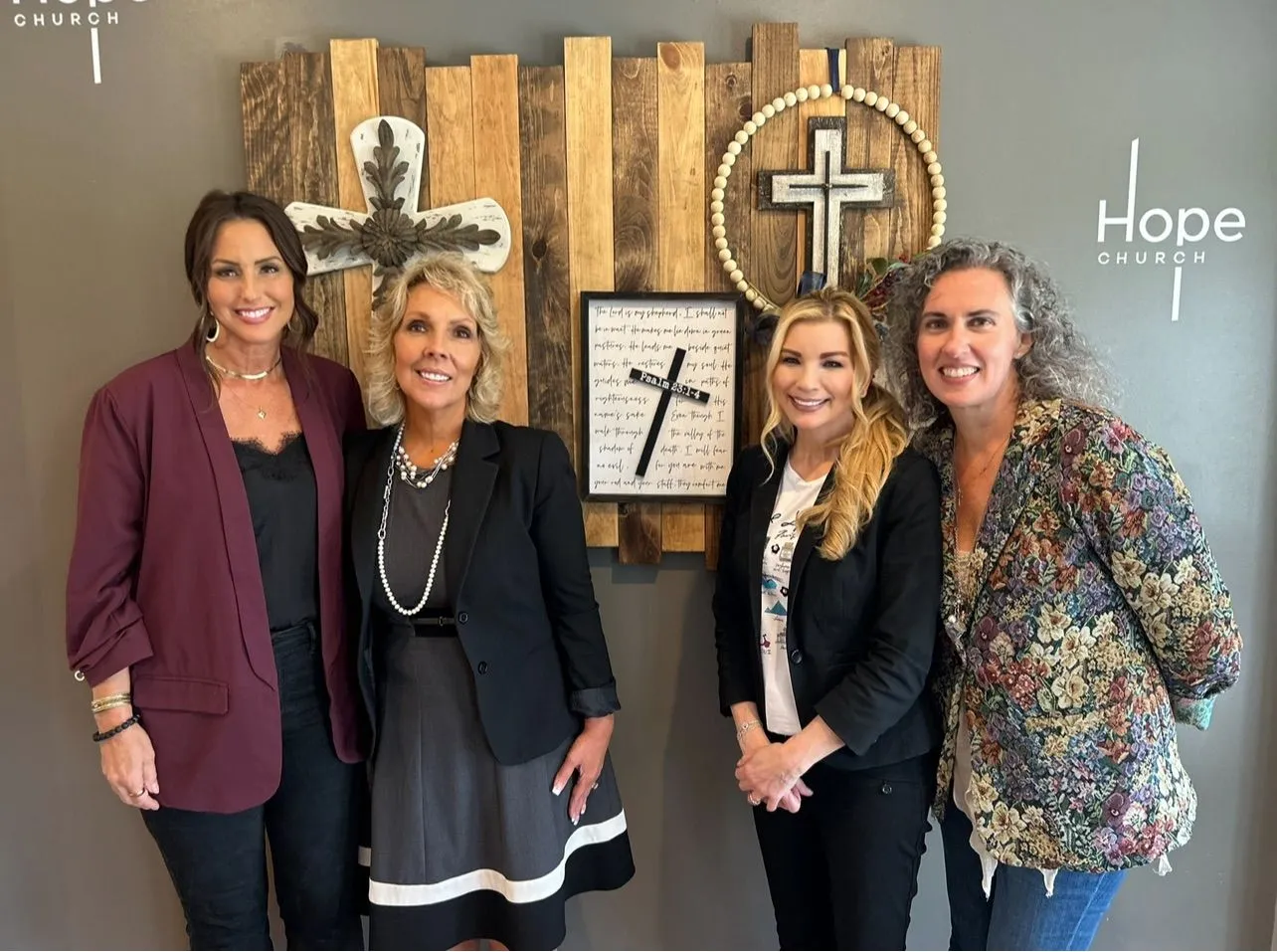
This fall, FEW ATL and Hope Church are creating space to explore this subject together through an evening study and fellowship series.
Join us on:
- Thursday, September 24, 2026, from 6:00–8:00 PM
- Thursday, October 22, 2026, from 6:00–8:00 PM
Bring your dinner or a snack, and come ready to fellowship over a meal as we study “How we spend God’s time.” These gatherings are an opportunity to slow down, listen, learn, and consider how faith should shape the way we use our days.
FEW ATL’s upcoming rhythm also includes:
- Paulding Chamber gatherings: third Fridays, 8:30–10:30 AM
- November 10: a breakfast gathering at Frannick’s Cafe in Dallas
- December 3: a holiday celebration and gift exchange supporting Shepherd’s Rest women’s shelter
You can find current event details and updates on the FEW ATL events page.
The calendar is not the point. The deeper invitation is to show up with faith, courage, and an open hand for the women around you.
A final reflection
You do not have to use every moment perfectly to live faithfully. You do not have to prove your value through exhaustion. You do not have to carry every assignment in one day.
Ask God to teach you how to recognize this season, honor its responsibilities, receive its gifts, and release what no longer belongs to you.
Your time is in His hands.
Use it to love well. Work with integrity. Rest without shame. Serve with humility. Make room for family and community. Follow God’s direction one faithful day at a time.
And remember: you do not have to lead alone.
Learn more about FEW ATL and find your place in a sacred, Spirit-led community of women who are ready to awaken, activate, and accelerate together.